Grade 4 Agriculture and Nutrition · Strand 1.0 Conservation of Resources · Sub-strand 1.1 Soil Conservation: Compost Manure
These are free study notes for Grade 4 learners. They follow the official KICD curriculum design for Grade 4 Agriculture and Nutrition (the same topics, in the same order, that your teacher uses) and are taken from our full Grade 4 Agriculture and Nutrition notes. Exam questions often show a compost heap and ask for a missing layer, or ask which waste should not go in. Both are covered below.
Compost manure is made from rotting plant and animal waste. In this topic we choose suitable materials, make compost using the heap method and use it in a crop garden.
Materials for compost
Compost manure
Manure made when plant and animal waste rots (decomposes).
| Use | Do not use |
|---|---|
| dry leaves, grass and twigs | plastic bags and bottles |
| vegetable and fruit peels | glass and tins |
| animal dung and poultry droppings | diseased plants |
| ash, wood shavings and soil | stones and metal |
The heap method
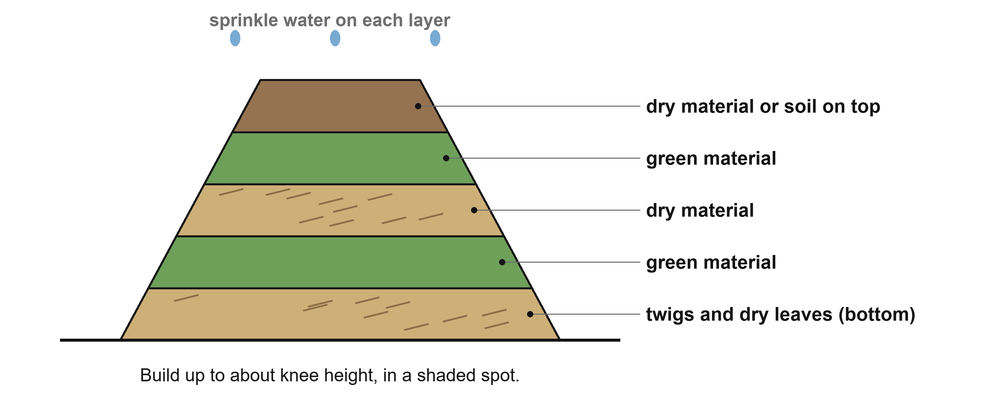
Making a compost heap
- Choose a shaded place near the garden and clear it.
- Put twigs and dry leaves at the bottom so air can move.
- Add a layer of dry material, then a layer of green material.
- Add a little animal dung, ash or soil, and sprinkle water on each layer.
- Repeat the layers up to about knee height and cover the top with soil or dry grass.
- Turn the heap every two to three weeks so that it rots evenly.
When is compost ready?
After about three months, the compost is dark brown, crumbly and smells like soil. You can no longer see the leaves and peels you put in.
Test
Push a stick into the middle of the heap for a few minutes. If it comes out warm, the material is rotting well.
Using compost in the garden
- Mix compost with the soil when preparing a seedbed.
- Put a handful in each planting hole.
- Spread it around growing crops.
Compost makes soil fertile, holds water and helps crops grow well. It is cheap and does not harm the soil.
Tricks and more examples
Trick: brown, green, water
Layer BROWN (dry) and GREEN (fresh) material, and add WATER to each layer.
Exam trap
Plastic, glass and tins never rot, so they never go into compost.
Exam-style
Why are twigs placed at the bottom of a compost heap?
Answer: to let air move through the heap so that the materials rot well.
Key points to remember
- Compost is made from rotting plant and animal waste.
- Heap method: twigs at the bottom, then dry and green layers with dung or soil, watered, turned every 2-3 weeks.
- Ready compost is dark, crumbly and smells like soil; it makes the soil fertile.
Test yourself: multiple choice
Which material should NOT be put in a compost heap?
Show the answer
B: Plastic does not rot.
What is put at the bottom of a compost heap?
Show the answer
C: Twigs let air move through the heap.
Why is a compost heap turned every few weeks?
Show the answer
A: Turning mixes the materials and adds air.
Ready compost is ______.
Show the answer
D: Well-rotted compost looks and smells like soil.
Compost helps crops because it ______.
Show the answer
D: It adds nutrients and holds water.
Practice questions
Name four materials suitable for making compost. (4 marks)
Show the answer
Dry leaves, grass, peels, animal dung, ash, soil (any four).
List the steps of making a compost heap. (4 marks)
Show the answer
Choose a shaded place; twigs at the bottom; layers of dry and green material with dung or soil; water each layer; cover; turn every 2-3 weeks.
Give two ways of using compost in a garden. (2 marks)
Show the answer
Mix it in the seedbed; put it in planting holes; spread it around crops (any two).
This is one topic. Get the whole year. The full Grade 4 Agriculture and Nutrition notes cover every sub-strand of Terms 1, 2 and 3 like this one, with pictures, key points and practice questions with answers, as a printable PDF for KSh 150. Pay with M-Pesa and download at once.
Get the full Grade 4 Agriculture and Nutrition notes · All Grade 4 Agriculture and Nutrition resources · Notes for every grade